In a nutshell
- 🧊 Cooler outdoor air warmed indoors lowers relative humidity, pushing surfaces above the dew point and reducing condensation and mould risk.
- 🌬️ Use short, targeted purge ventilation after dusk: cross-vent for 10–20 minutes, harness the stack effect, keep trickle vents open, and micro-vent bedrooms.
- ⚖️ Pros vs. cons: big wins in RH reduction, indoor air quality, and fabric health; trade-offs include potential heat loss, noise/security issues, and limited gains on very humid nights.
- 📊 Real-world test: a Salford flat dropped from 67% to ~50% RH and cut dew point by ~5°C after an 18-minute night purge, with only ~1.4°C cooling—minimal energy penalty.
- 🛠️ Act on data: check a hygrometer, time purges post-cooking/showering, run extractors, and avoid drying clothes on radiators to prevent nightly moisture build-up.
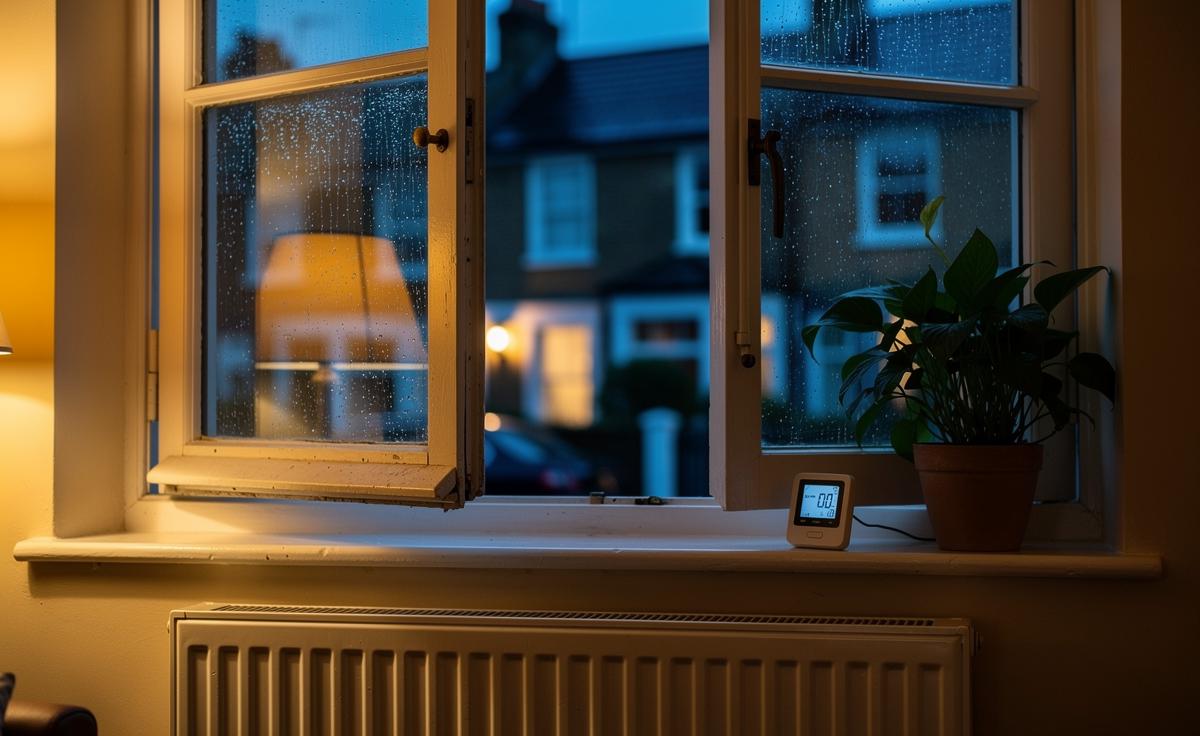
As British evenings draw in and radiators begin their steady hum, many homes face an old adversary: condensation that seeds mould, peels paint, and aggravates asthma. An understated fix is hiding in plain sight. Open the window after dusk, when the air is cooler, and you invite in a change in physics as much as fresh air. Cooler outside air, once it mixes and warms indoors, can carry a lower relative humidity, accelerating evaporation from damp surfaces. Short, well-timed night ventilation can trim indoor moisture without torpedoing comfort or energy bills. Here’s how the science stacks up, how to apply it room by room, and why “more ventilation” isn’t always the answer.
Why Cooler Night Air Cuts Condensation
Air’s capacity to hold water expands with temperature. That’s why we talk about relative humidity (RH)—the percentage of moisture air is holding compared with its maximum at a given temperature—alongside absolute humidity (the actual grams of water per cubic metre). After dusk, outside temperatures fall. Bring that cooler air indoors and it warms by a few degrees, increasing its carrying capacity and reducing its RH. Lower indoor RH means damp walls, windows, and fabrics give up moisture more readily, halting the nightly cycle of condensation.
A simple example makes this concrete. Imagine a cool evening with outdoor air at 10°C and 80% RH. The same parcel of air may warm to 19°C indoors. Its water content barely changes on the journey, but its capacity does. Result: the RH falls after it warms, delivering drier-feeling air without dehumidifiers or chemicals. The table below shows why this matters for condensation risk and dew point (the temperature at which air becomes saturated and water condenses).
| Scenario | Temp (°C) | RH (%) | Approx. Absolute Humidity (g/m³) | Resulting RH if Warmed Indoors to 19°C (%) |
|---|---|---|---|---|
| Cool evening air | 10 | 80 | ~7.5 | ~46 |
| Mild evening air | 12 | 75 | ~7.9 | ~48 |
| Damp night air | 8 | 90 | ~7.3 | ~45 |
The headline: cooler outside air, once warmed indoors, often ends up “drier” by RH—enough to flip surfaces from condensing to evaporating. That’s the pivot that tames overnight moisture build-up, especially on single-glazed panes and thermal bridges behind wardrobes.
How to Ventilate After Dusk Without Losing Too Much Heat
The trick is targeted, short, and smart. Think of it as a “purge, then seal” routine. You’re using a blast of low-RH air to strip moisture, not airing the house until your teeth chatter. Done well, the heat penalty is modest while the condensation control is meaningful. Timing and airflow paths matter as much as duration.
Practical steps that work in typical UK homes:
- Purge ventilation: Open opposite windows for 10–20 minutes after cooking, showering, or laundry. Crossflow pulls moist air out quickly.
- Stage the night: Vent immediately after dusk or when outside temp begins dropping, then again before bed if you’ve generated extra steam.
- Use the stack effect: Crack an upstairs window and a downstairs one; warm, moist air exits high, cooler air enters low.
- Shut internal doors to confine moisture to wet rooms during purges; then open for a whole-home equalise pass.
- Trickle vents and fans: Leave trickle vents open; run extractor fans for 20–30 minutes post-shower or cooking.
- Micro-vent at night for bedrooms: a small gap or tilt-and-turn setting limits heat loss while keeping RH in check.
Live on a noisy or polluted street? Vent the quiet façade and use kitchen/bath fans to exhaust on the other side. Security worries? Prefer top-hung or tilt-secure openings and limit night gaps. Allergy season? Consider mesh screens and time purges to lower-pollen hours. The aim is not a chilly home, but a short, dry-air exchange that resets humidity before it condenses.
Pros and Cons of Night Venting
Night venting pays off because it complements heating: you reduce latent moisture that would otherwise condense on the first cold bridge, drip onto sills, and feed mould. It’s cheap, fast, and compatible with any tenure or budget. But—context rules. Opening a window is a tool, not a religion.
- Pros:
- Rapid RH reduction without buying a dehumidifier.
- Improves indoor air quality by diluting CO₂ and VOCs.
- Targets the hours when condensation risk peaks.
- Supports fabric health—paint, plaster, and timber last longer.
- Cons:
- Heat loss if overdone or left ajar for hours.
- Street noise, pollution, or security concerns in some areas.
- Limited benefit on very warm, humid nights or in fog.
- Not a cure-all for severe cold-bridge or rising damp problems.
Why opening the window isn’t always better: If outside absolute humidity is higher than indoors—think humid summer nights or mist—venting can import moisture. Check a simple hygrometer: if outdoors reads cooler and similar or lower RH than indoors, a short purge likely helps. Pair this with basic habits—lids on pans, extractor fans, no drying clothes on radiators—and you’ll cut nightly moisture load before it can settle on cold glass.
A Small Home Test: Data From a Damp-Prone UK Flat
In a one-bed upstairs flat in Salford with recurring winter window drip, I ran a simple test using two consumer data loggers. After an evening pasta boil and shower, the lounge measured 21.0°C and 67% RH; the bedroom was 20.3°C and 64% RH. I opened the bedroom tilt window 12 cm and the lounge top-light 8 cm for 18 minutes, then shut both while leaving trickle vents open.
- Before purge: 21.0°C, 67% RH (dew point ≈ 14.5°C).
- Immediately after: 20.0°C, 53% RH (dew point ≈ 10.2°C).
- One hour later: 19.6°C, 50% RH (dew point ≈ 9.3°C); no visible fogging on the coldest corner pane.
- Estimated absolute humidity drop: roughly 3–4 g/m³, enough to flip sills from wetting to drying.
The flat did cool by around 1.4°C during the purge, but the boiler recovered that over the next hour with no comfort complaints. Crucially, the dew point fell well below the coldest glass temperature. That widened safety margin is what prevents nightly wetting and the week-on-week creep of mould. It’s not a peer-reviewed study—just a reporter’s field note—but it mirrors what many energy advisers observe: short, sharp night ventilation arrests moisture build-up with minimal energy penalty.
For damp-prone UK homes, the physics is on your side after dusk: cooler outside air, warmed indoors, usually means a friendlier RH and drier surfaces. Blend quick cross-ventilation with extractor discipline and small daily habits, and you cut the roots of condensation rather than mopping symptoms. The key is to vent with intention—briefly, at the right times, and with an eye on your hygrometer. What’s your current evening routine, and how might a data-led, 15-minute night purge change the way your home feels—and smells—by morning?
Did you like it?4.6/5 (27)