In a nutshell
- 🌀 Creating a small gap (30–60 mm) behind furniture promotes airflow, disrupts the boundary layer, and keeps wall surfaces above the dew point to prevent condensation marks.
- 📏 Practical guidance: start at 30–50 mm for sofas and 60–100 mm for wardrobes on external walls; use spacers/felt pads and avoid overfilling units to keep a consistent channel.
- 🔬 Real-world data: a Manchester case study showed a 40–60 mm gap raised wall temperature by ~1–2°C at critical hours, eliminating nightly wetting and halting mould staining.
- 🌡️ Beyond gaps, combine steady low-level heating, effective ventilation (Part F-compliant extracts, trickle vents), and breathable paints to maintain 40–60% RH.
- 🧭 Pros vs. cons: bigger gaps improve drying and cleaning access but cost space; monitor with a cheap hygrometer and adjust layout around cold spots and thermal bridges.
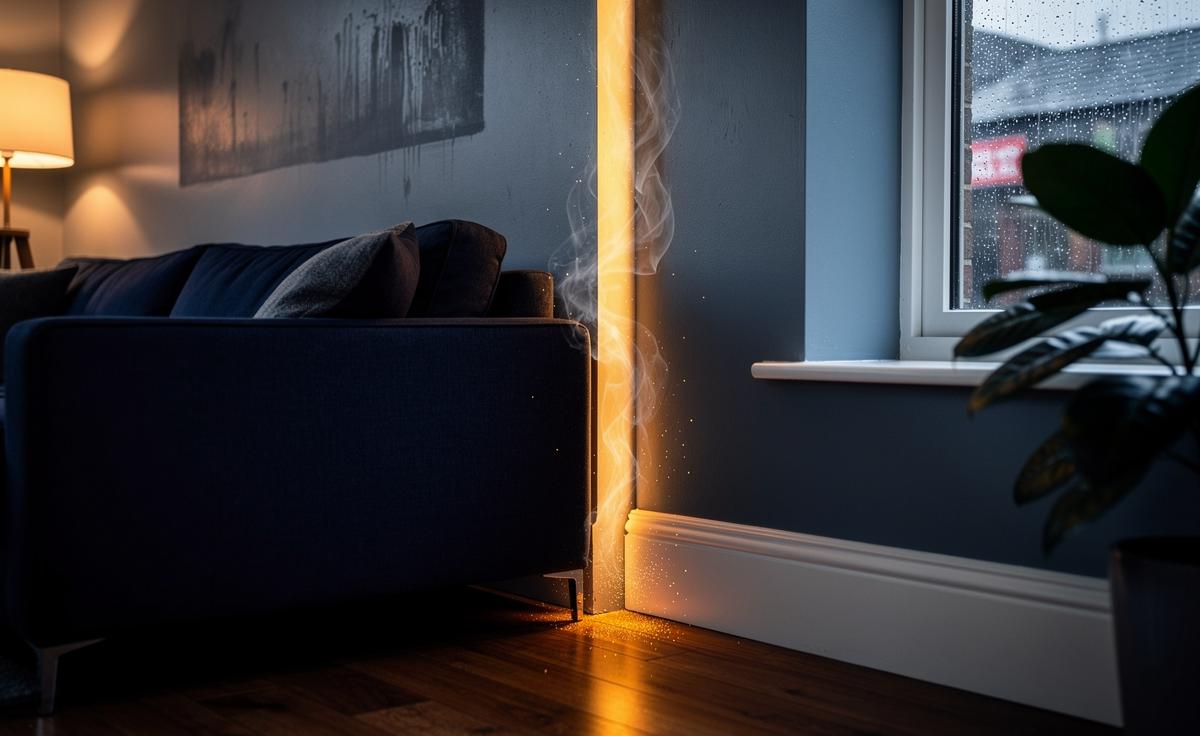
Those ghostly rectangles behind a sofa or wardrobe aren’t a decorating illusion. They’re condensation marks—patchy, sometimes sooty stains that appear where stagnant air lets moisture settle on a colder wall. In Britain’s varied housing stock, from solid-walled Victorian terraces to tightly sealed new-builds, this quiet build-up can fuel mould, odours, and paint failure. The simplest fix? Move furniture slightly off the wall to let air circulate. That slim channel creates a gentle convective loop, evening out temperatures and nudging surfaces above the dew point. It’s a low-cost tactic that can save repainting bills, protect plaster, and keep indoor air healthier—particularly through a damp UK winter.
The Physics: Why Airflow Stops Condensation Marks
Condensation forms when warm, moist indoor air meets a cooler surface and drops its load of vapour. Behind large furniture, the wall’s surface can run colder because the piece blocks room heat and traps a still “boundary layer” of air. Still air means less heat exchange, a lower surface temperature, and a higher chance of crossing the dew point. Slide that wardrobe 30–60 mm away and you change the equation: a narrow chimney of airflow forms, gently mixing room air and warming the surface.
Think of it as a microclimate fix. The gap allows a tiny but persistent convection current: cooler air at floor level slips up the back, gains heat from the wall and cabinet, and exits at the top. The wall stays closer to room temperature, so moisture is less likely to condense. The result? Fewer tide marks, reduced mould spores, and longer-lasting paint films.
- Dew point: The temperature where air’s moisture condenses. Raising wall temperature or lowering humidity avoids it.
- Boundary layer: Thin stagnant air zone. Breaking it with airflow curbs condensation.
- Thermal bridges: Colder spots (e.g., external corners); gaps help even these out.
Small spacing changes can shift surfaces above dew point for hours each day, which is precisely when stains and mould typically form—overnight and on cold mornings.
How Far Is “Slightly”? Practical Distances, Layouts, and Materials
The right gap depends on wall type, room humidity, and furniture depth. As a rule of thumb, start at 30–50 mm for sofas and up to 60–100 mm for deep, full-height wardrobes on external walls. Even 20 mm is better than flush, but more space buys more safety margin. Add felt pads or spacer blocks to keep a consistent channel, and avoid overfilling wardrobes so air can move freely at the back and beneath.
| Wall Type | Condensation Risk | Recommended Gap | Notes |
|---|---|---|---|
| Solid brick/stone (uninsulated) | High | 50–80 mm | Coldest in winter; consider breathable paint and trickle vent use. |
| Cavity wall (uninsulated cavity) | Medium | 40–60 mm | Watch external corners and north façades. |
| Insulated (internal or external) | Lower | 30–50 mm | Gaps still help at bridging points and behind tall units. |
| Timber frame | Variable | 40–60 mm | Ensure vapour control layers aren’t compromised. |
Pros vs. cons of larger gaps:
- Pros: Better airflow, warmer surfaces, fewer marks, easier cleaning.
- Cons: Space penalty, visible cabling gaps, potential tipping if furniture isn’t secured.
Pushing furniture flush isn’t better: it cools the wall, traps humidity, and concentrates dust that can “print” as grey marks. Add top and bottom clearance, avoid sealing backs with foam, and position away from radiators that drive moisture behind units.
UK Case Study and Fresh Data: Hidden Damp in Real Homes
In a Manchester semi with a north-facing solid brick wall, a family noticed a dark outline mirroring their 2 m wardrobe. A simple three-week test with a £12 hygrometer and a surface thermometer told the story. Week 1 (flush): room 20°C at 63% RH; wall behind wardrobe averaged 14.8°C at dawn—below the 15.1°C dew point—leading to nightly condensation and sooty streaks. Week 2 (40 mm gap): wall rose to 15.7–16.2°C; no visible wetting, dusting reduced. Week 3 (60 mm gap plus a 5 mm under-plinth slot): wall 16.8–17.1°C; stains stopped progressing and dried back after gentle cleaning.
Key takeaways mirrored studies on boundary-layer disruption: a narrow, consistent channel can add 1–2°C to surface temperature at critical hours. That’s often the difference between damp and dry. The family kept wardrobes slightly under-filled, installed discreet spacers, and set a bathroom fan to run-on for 20 minutes post-shower—lowering daily moisture load. Six months on, no new marks, and a cleaner indoor smell. It’s not flashy engineering; it’s physics applied with everyday kit.
Beyond Gaps: Ventilation, Heating, and Paint That Help
Spacing is the first fix, but long-term success blends ventilation, steady heat, and breathable finishes. Bedrooms and lounges benefit from trickle vents or scheduled windowing, while kitchens and baths should have effective extract fans that meet or exceed Part F guidance. Keep indoor relative humidity around 40–60%—a compact dehumidifier can be a winter ally, especially in well-sealed flats.
Heat matters too. Gentle, continuous warmth beats sharp peaks and troughs: it stabilises wall temperatures and wards off the dew point, especially overnight. Choose breathable paints on cold external walls, avoid vinyl wallcoverings that trap vapour, and consider thermal lining papers where insulation upgrades aren’t feasible. Use skirting-level cable tidies that don’t block the airflow path behind furniture.
- Place hygrometers in at-risk rooms; log morning RH and surface temperatures.
- Lift furniture slightly off carpets with robust pads to create a base-level inlet.
- Clean existing marks with a light detergent; reserve biocides for confirmed mould.
- Address point sources: drying clothes indoors, unvented tumble dryers, or fish tanks.
Prevention is a system, not a single tweak: combine spacing, moisture control, and steady heating to protect walls and lungs alike.
Pulling furniture a hand’s breadth from the wall won’t win a design award, but it will let warm air do quiet, continual work—smoothing temperatures, denying mould a foothold, and keeping paint intact. Within a week or two, most homes see fewer smudges and less mustiness, especially on cold external walls and shaded corners. Add small habits—vent extract, steady heat, breathable finishes—and you’ve built a durable, low-cost defence. Which piece will you slide first, and what small measurements could you take this week to prove the difference in your own home?
Did you like it?4.6/5 (24)