In a nutshell
- 🌬️ Cold air freshens fibres via low absolute humidity and a strong vapour pressure deficit, with wind accelerating moisture removal and odour ventilation—while avoiding indoor condensation.
- ❄️ The physics: watch the dew point; drying can continue via sublimation near freezing, and even weak winter sun aids evaporation—chase low dew points and steady breeze rather than raw temperature.
- 🧰 Practical setup: use a high-speed spin, space items generously, peg seams/corners, face sheets to wind, and finish briefly on a warm-rail if needed for softness and completeness.
- ⚖️ Pros vs. Cons: save energy, protect fibres, and cut indoor humidity, but plan around weather, possible stiffness, short daylight, and local air quality.
- 🧪 Troubleshooting & hygiene: fix stiffness with a snap-shake, beat mustiness by boosting spin and spacing; drying doesn’t sterilise, but UV and airflow curb odours—finish indoors if pollution or fog looms.
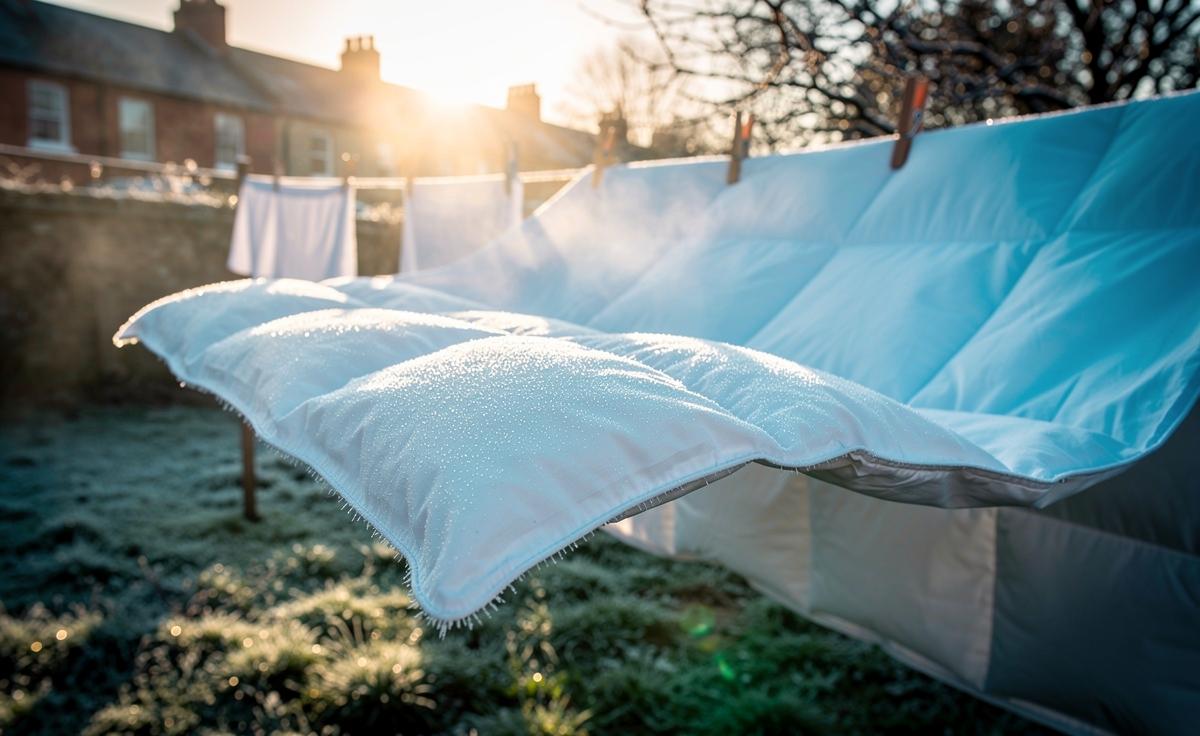
As energy bills bite and radiators run cooler, British households are rediscovering a quiet winter ritual: air-drying bedding outdoors. Step into a back garden on a crisp January afternoon and you’ll often see sheets lifted like sails, fibres taut and bright. It feels counterintuitive, yet cold air can freshen fabrics without leaving them clammy. The trick lies in humidity, wind, and time. When the dew point sits comfortably below fabric temperature and there’s a steady breeze, moisture migrates outward, odours dissipate, and fibres regain their spring. Below, I unpack the science and share field-tested tactics so your winter line becomes a low-cost finishing school for linen, cotton, and everyday bedding.
Why Cold Air Freshens Fibres Without Dampness
We associate freshness with heat, but winter air brings a hidden advantage: low absolute humidity. Even when relative humidity reads a modest 60%, the actual water content of 4°C air is tiny compared with a 20°C room. That gap drives a vapour pressure deficit, nudging moisture from fibres to atmosphere. Add wind, and you turbocharge convection across the yarn surface, whisking away moisture and airborne odours. What feels like “cold and wet” can, hour by hour, be drier than your centrally heated lounge, particularly on bright, breezy days between showers.
There’s also a mechanical reset. As sheets flap, the weave opens microscopically, releasing stale indoor scents and body odours. The result is that distinct outdoor note—clean but not perfumed—because odour molecules are ventilated rather than masked. Importantly, outdoor drying avoids pumping litres of water into your home’s air, the chief culprit in condensation and black mould. Instead of feeding your window sills, that moisture disperses harmlessly into the sky.
In practice, this means a king-size cotton sheet pegged well on a 6–10 mph breeze can go from “washed” to “cupboard-ready” with only a short indoor finish—often less than 20 minutes on a warm rail. Freshness isn’t about heat; it’s about air exchange.
The Physics: Sublimation, Dew Point, and Winter Sun
On near-freezing days, moisture in fibres may briefly freeze. Counterintuitive as it sounds, drying continues via sublimation—ice turning directly to vapour—especially when air is moving and the dew point remains below fabric temperature. If the dew point climbs (think foggy afternoons), water condenses back into cloth and progress stalls. The golden rule: chase low dew points, not high temperatures. A glance at your weather app’s dew point and wind speed tells you far more than the thermometer alone.
Winter’s low sun still helps. UV is weaker, but radiant energy warms dark pegs and the line itself, creating tiny pockets of drier, warmer air that encourage migration of moisture. And unlike tumble-drying, which can abrade fibres and fade prints, cold-air drying is gentle on cotton percale and sateen weaves, preserving hand-feel and tensile strength. Below is a quick guide, distilled from winter trials across Yorkshire and Fife:
| Air Temp | Relative Humidity | Wind | Sky | Likely Outcome |
|---|---|---|---|---|
| 0–2°C | 40–55% | 15–25 mph | Bright/cloud | Fast “freeze-dry”; sheet near-dry in 2–3 hrs |
| 3–6°C | 50–65% | 10–20 mph | Bright | Consistent drying; indoor finish 10–20 mins |
| -2–1°C | 70–85% | 5–15 mph | Overcast | Slow; expect stiffness, then soften indoors |
| 3–8°C | 80–95% | <5 mph | Fog/drizzle | Poor; risk of re-dampening—postpone |
Practical Setup for Winter Line-Drying
Success begins in the drum: a high-speed spin (1,200–1,600 rpm) strips bulk water, cutting outdoor time dramatically. Next, pick your weather window—late morning to mid-afternoon is ideal when the dew point dips and breezes stabilise. Space is your ally. Give fibres room to breathe and you’ll halve the time to “touch-dry”. For bedding, long edges downwards encourages drip-off; for duvet covers, peg by corners and the opening to create a windsock effect.
- Shake each item twice to lift the pile and align fibres.
- Use two lines or a rotary with alternate arms to prevent overlap.
- Peg at stress points (seams, corners) to reduce sag and creasing.
- Face the broadside of sheets to the prevailing wind for maximum airflow.
- Flip items once if the breeze is light to refresh the boundary layer.
- Avoid trees and walls that trap moisture; consider a simple windbreak to channel flow.
Finish intelligently. If corners feel cool but not clammy, move indoors for a brief warm-rail or airing-cupboard finish. Reserve outdoor drying for sheets, pillowcases, and duvet covers; filled duvets are bulkier and may require professional drying. And keep an eye on the Met Office app: if humidity spikes or drizzle approaches, bring pieces in before they backslide.
Pros vs. Cons for UK Households
Line-drying in winter isn’t purist hair-shirt living; it’s a practical blend of thrift and fabric care. In a week of notebook testing near Leeds (4–6°C, 55–65% RH, 12–18 mph winds), a king-size cotton sheet reached “cupboard-dry” in under three hours with a 15-minute radiator finish, while pillowcases needed no finish at all. Outdoors, the air does the heavy lifting; indoors, you simply polish. Still, there are trade-offs worth weighing before you peg the next wash.
- Pros: Energy savings; lower indoor humidity; gentler on fibres; signature outdoor freshness; fewer set-in creases if pegged taut.
- Cons: Weather dependency; occasional stiffness (solved by a warm-rail minute); short daylight; urban air quality on busy roads; the need to plan around showers.
Compared with tumble-drying, fabric temperatures stay low, preserving elastics and hems. Compared with indoor racks, you dodge condensation that nurtures mould spores. And winter’s low pollen counts mean fewer allergen worries than spring. If you’re roadside, pick cleaner windows—post-rain afternoons rather than rush hour—and give a brisk indoor shake before folding to dislodge particulates.
Troubleshooting and Hygiene Myths
If bedding feels “crisp” or slightly stiff, don’t panic—that’s typically from fibre alignment after freezing or rapid surface drying. A gentle snap-shake and a five-minute warm-rail rest restore softness. Musty notes? They usually trace back to slow spins or overcrowded lines; increase spin speed and spacing, and ensure air can reach the middle of duvet covers. Stuck odours rarely survive a breezy hour and a firm shake. Grey weather ahead? Part-dry outdoors, then finish with a dehumidifier in a small room for a quick, condensation-free endgame.
On hygiene: cold air doesn’t “sterilise” laundry. Cleanliness comes from your wash cycle and detergent; drying simply denies microbes the moisture they need. That said, outdoor UV and airflow reduce odour-causing bacteria load compared with damp indoor racks. Worried about pollution? Most particulates won’t bond strongly to smooth cotton once fully dry; a post-dry shake removes much of what settled. For households with babies or sensitive skin, wash at manufacturer-recommended temperatures and consider an indoor finish if the forecast turns foggy.
On a good winter’s day, outdoor air is a free, gentle finishing tool that coaxes water out, refreshes fibres, and keeps indoor walls dry. I’ve watched sheets in Fife go from sodden to satisfyingly crisp while the kettle boiled for a late lunch, the breeze doing what no tumble cycle can: lift, loosen, and revive. Freshness, in winter, is the art of timing and airflow. Will you give your bedding a cold-air audition this week—and what micro-tweaks to timing, pegging, or finish will earn your household the freshest sleep of the season?
Did you like it?4.4/5 (30)