In a nutshell
- 🌱 The overlooked culprit is soil compaction, which restricts oxygen, water infiltration, and root growth—so sunlight alone can’t deliver healthy plants.
- 💧 Watering wisely matters: deep, infrequent watering builds resilient roots, while daily sprinkling and poor drainage cause anaerobic stress and disease.
- 🧪 Balance pH and nutrients: incorrect pH locks up essentials; gentle, organic feeding and supporting the microbial web unlock sustained growth.
- 🔍 Use simple diagnostics—screwdriver and infiltration tests, jar texture checks, and pH strips—to confirm issues before adding fertiliser.
- 🛠️ Quick fixes: fork-lift rather than dig, add a 3–5 cm compost mulch, protect soil with paths, plant bio-drillers, and improve container drainage.
British gardeners pour over seed catalogues and chase every sliver of sunshine, yet borders can still sulk and stalls of seedlings stay stubbornly small. The culprit is often hiding underfoot: soil structure. When earth is compacted or poorly aerated, roots cannot breathe, water cannot infiltrate evenly, and nutrients remain locked beyond reach. Even with perfect sunlight, plants starve if their roots are short of air, water balance, and access to biology. In allotments from Leeds to Lewes, I’ve seen vibrant plots transformed within weeks by fixing the substrate, not the sky. Here’s how to diagnose the overlooked mistake—and correct it—so your garden finally matches the forecast.
The Hidden Culprit: Soil Compaction Is Suffocating Your Borders
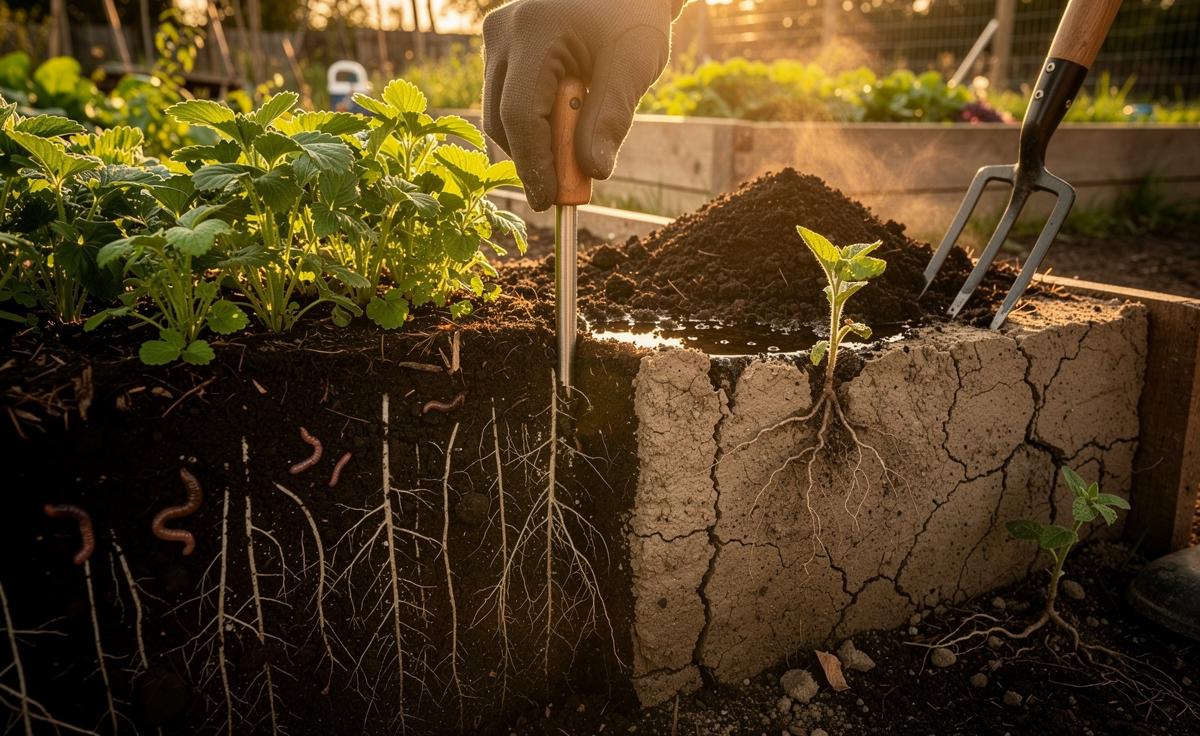
Walk across a lawn after rain and notice water puddling rather than soaking in? That’s a flashing beacon of soil compaction. Treading beds when wet, parking wheelbarrows on the same path, or rotavating the top few centimetres each spring all compress the profile. Compacted soils lack pore spaces, so oxygen is scarce and beneficial microbes struggle. Roots then grow shallowly, circling for air instead of diving deep to resilience. Plants wilt on hot days not because they lack sunlight, but because compacted soil can’t deliver water quickly enough.
On a blustery March visit to a Surrey allotment, a keen new grower showed me carrot rows with lush tops and stunted roots. A simple screwdriver test—pressing a standard screwdriver into the bed—stopped after 3 cm. The fix wasn’t more feed or more light; it was restoring structure: fork-lift (not dig), incorporate organic matter, and keep feet off. Within a season, his carrots ran straight and long, and rain stopped skittering off like a pane of glass.
How to begin? Use a garden fork to gently lift and crack, not turn, heavy ground; add 3–5 cm of compost as a mulch; and designate permanent paths to keep pressure off roots. In clay-rich UK soils, this combination re-opens pore spaces and invites earthworms back to work the night shift.
Watering Wisdom: Why More Water Isn’t Always Better
Overwatering is the close cousin of compaction. Water fills the very pores roots use to breathe, leading to anaerobic conditions and root rot. Ironically, plants can look thirsty—leaves droop—because roots are damaged and unable to lift moisture. More water on top of a suffocating root zone is like opening a window in a submarine. The better strategy is to water deeply, then allow the surface to dry slightly, encouraging roots to chase moisture downward where temperatures and supply are steadier.
Container gardeners are especially vulnerable. Pots without adequate drainage holes create a perched water table; add saucers left full after a shower, and you’ve brewed a swamp. Switch to a peat-free mix with added grit for structure, empty excess from saucers after 30 minutes, and water in the morning so leaves dry by dusk. In beds, test before you pour: push a finger down to the second knuckle—cool and damp means wait; warm and dry, water slowly at the base to avoid runoff.
- Pros of Deep, Infrequent Watering: Drives deeper roots; reduces evaporation; steadier growth.
- Cons of Daily Sprinkling: Shallow rooting; higher disease risk; nutrient leaching.
- Tip: Mulch 3 cm thick to cut evaporation and buffer soil temperature.
PH, Nutrients, and the Microbial Web That Powers Growth
Sunlight fuels photosynthesis, but pH and soil biology decide whether nutrients are actually available. Many UK plots hover around neutral, yet a patch swinging slightly acidic or alkaline can lock up key elements. Brassicas sulk in acidic beds; blueberries refuse to thrive in alkaline ones. When pH is off, adding more fertiliser won’t feed your plants—it will feed your frustration. A simple pH kit guides you: most vegetables prefer around 6.5; ericaceous plants want lower. Adjust gradually with lime (to raise) or sulphur and ericaceous compost (to lower), then retest a few weeks later.
Equally critical is the microbial network that mineralises nutrients and ferries them to roots. High-salt feeds or constant hoeing of bare soil can depress this life. Aim for steady, gentle nutrition: compost, well-rotted manure, leaf mould, and seaweed extracts. Mycorrhizal inoculants can help in new beds or around newly planted trees, but their benefits soar when soil isn’t compacted and remains evenly moist—not soggy. Feed the soil, and the soil feeds the plant.
For containers, refresh a third of the mix each season and use slow-release fertilisers. In beds, side-dress hungry crops mid-season and keep a living or dead cover on soil to protect microbes from UV and pounding rain.
Practical Diagnostics and Fixes You Can Do This Weekend
Good journalism starts with evidence; good gardening does, too. Begin with quick tests. The screwdriver test: if it glides in 10–15 cm, structure is decent; if it stops early, you have compaction. The infiltration test: sink a bottomless tin can, fill it, and time how long it drains—slug-slow drainage flags tight soil. A jar test with a shaken soil-and-water mix shows your clay/silt/sand balance. Follow with a pH strip test to rule out nutrient lock-up. Diagnose before you dose.
Fixes are satisfyingly simple. Fork-lift beds in autumn, then mulch. Keep to paths, using boards during wet spells. Plant bio-drillers—deep-rooted species like daikon radish—to open channels. In pots, upsize by one notch, add grit for drainage, and never let containers sit in water. Shift to a “soak, then pause” watering rhythm and track moisture by feel, not calendar.
| Symptom | Likely Cause | First Fix |
|---|---|---|
| Water pooling on soil | Compaction | Fork-lift soil; add compost mulch |
| Drooping after watering | Root suffocation | Reduce frequency; improve drainage |
| Yellowing despite feeding | pH imbalance | Test pH; adjust gradually |
| Stunted, shallow roots | Shallow watering | Water deeply; mulch to retain moisture |
In the end, great gardens aren’t built by chasing the sun but by stewarding the soil beneath it. If your plants refuse to romp despite south-facing glory, look down, not up: relieve compaction, water with intent, balance pH, and feed the living soil that feeds everything else. Sunlight is necessary—but never sufficient—without oxygenated, well-structured, biologically active ground. This season, try a weekend of diagnostics and a month of mulching before you reach for more fertiliser. What will you change first underfoot to turn your “sunny but stubborn” plot into a thriving, deeply rooted garden?
Did you like it?4.6/5 (20)