In a nutshell
- 🌙 Circadian consistency: Align late meals to your shifted schedule with a protein-forward plate, lighter carbs, and a clear gap before bed for steadier energy and sleep.
- 🥗 Strategic snacking: Use pre-portioned, protein- and fibre-rich “bridging” snacks to prevent ravenous 9:30 p.m. dinners and cut mindless grazing.
- 🍳 Protein-first, quick builds: Rely on 20-minute, one-pan meals and gadget-forward aids (air fryer, multi-cooker) plus micro-batching to reduce friction—while avoiding ultra-processed shortcuts.
- 😌 Wind-down rituals and social jet lag control: Close the kitchen with calming routines, keep weekend timing within ~1 hour of weekdays, and limit alcohol to protect sleep.
- 💧 Hydration boundaries and data curiosity: Set a caffeine curfew, use low-sodium flavour swaps, and run small, trackable experiments to personalise what works.
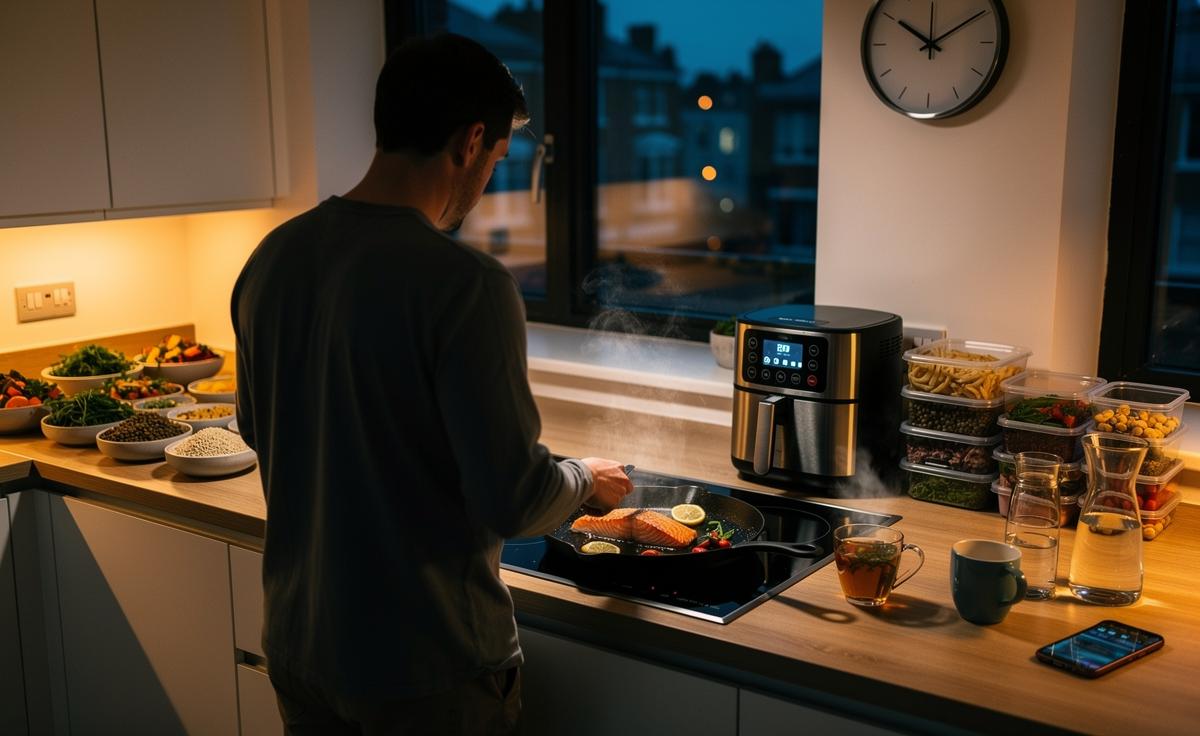
Across the UK, the kitchen light still flickers on well after 9 p.m.—a marker of modern life shaped by shift work, hybrid schedules, and the siren call of streaming marathons. Nutritionists increasingly observe clear patterns among late-night cooks. While the trope says “nothing good happens after 9,” the reality is subtler: late cooking can be aligned with health goals if handled with structure and intention. Drawing on frontline dietetic practice, behavioural science, and hands-on reporting, this piece unpacks seven traits that professionals now associate with people who fire up the hob after dark. Expect practical contrasts, evidence-informed routines, and real-world strategies you can adapt within a busy week.
Shifted Circadian Rhythms and Metabolic Flexibility
People who cook after 9 p.m. often live on a shifted clock. Nutritionists spot a common thread: these eaters don’t simply “delay dinner”; they re-time their entire food day. That can mean a later first meal, a mid-evening protein anchor, and less emphasis on early-morning carbs. The defining trait isn’t chaos—it’s a deliberate attempt to match meals to wakefulness. While circadian biology suggests our bodies may handle carbohydrate-heavy meals better earlier, late cooks who thrive tend to emphasise protein, fibre, and moderate fats to keep overnight blood sugar steadier and sleep less disrupted.
Signals nutritionists look for include:
- Consistent sleep-wake windows (even if they’re late).
- Structured meal timing with clear gaps between the last bite and bedtime.
- Macro-rotation: lighter carbs late, protein-forward plates.
Composite case study: A paramedic on rotating shifts moves dinner to 9:30 p.m., pares back starch to roasted veg, and adds Greek yoghurt before sleep for satiety. The result, according to their dietitian, is fewer nocturnal cravings and better mood stability—not because late is superior, but because the pattern is internally consistent.
Strategic Snacking Discipline, Not Mindless Grazing
Late cooking can invite snacking pitfalls. The trait nutritionists admire is snack intention: pre-portioned, protein- or fibre-rich options that stop the fridge “drive-by.” When late-night cooks plan the nibble, they control the meal. This group often keeps defined “bridging” snacks to avoid ravenous dinner portions, such as a small tin of fish with oatcakes at 7 p.m. and then a proper plate at 9:30 p.m. They aim for roughly 10–20 g protein and some fibre for satiety, with minimal added sugar to protect sleep quality.
Practical markers include:
- Pre-portioned nuts, hummus pots, or skyr yoghurts.
- Fruit paired with protein (apple + cheddar; berries + kefir).
- Clear stop cues: one bowl, one spoon, no grazing from the package.
Why “just a little” isn’t always better: a tiny, low-protein snack can backfire, priming hunger and pushing dinner later still. Conversely, a planned mini-meal supports portion control at 9:30 p.m. and curbs late sugar hunts.
Preference for Quick, High-Protein Cooking
After 9 p.m., success hinges on speed without sacrificing nutrition. Dietitians frequently note a tilt toward 20-minute, high-protein builds: eggs with veg, tofu stir-fries, pan-seared fish, or air-fried chicken thighs with wholegrain wraps. The late-night cook’s larder is strategically simple—pre-washed greens, frozen veg, tinned legumes, vacuum-packed grains, and a couple of sauces for instant flavour. The aim is minimal friction: less chopping, more assembling.
Common patterns include:
- Protein-first plating (15–35 g per serving).
- One-pan or sheet-pan methods to reduce cleanup fatigue.
- “Sauce smart”: tahini, harissa, pesto, or soy-ginger for fast depth.
Nutritionists flag the benefits—better satiety, steadier energy, and improved muscle recovery for late exercisers—while warning against defaulting to ultra-processed fillers. A simple heuristic many use: if it takes longer to decide than to cook, you need a three-dish go-to roster—for instance, omelette + salad, lentil dal + spinach, or salmon + microwaved quinoa. Decision-light cooking is the late eater’s edge.
Elevated Stress Load Paired With Wind-Down Rituals
People cooking late are often juggling stress: overtime, caregiving, or compressed commutes. The trait nutritionists identify in those who fare well isn’t superhuman resilience; it’s a wind-down strategy welded to food timing. They treat the meal as a cue to shift gear. Practices include dim lighting, screens off by the last bite, a short walk, or herbal tea to signal “kitchen closed.” This pairing lowers the risk of post-meal grazing and supports better sleep onset.
Tell-tale behaviours:
- Plate, eat, pause—then close the kitchen with a tidy-up routine.
- Breathing drills or a 10-minute stretch to downshift the nervous system.
- “Last light” rule: avoid bright screens within 30–60 minutes of bed.
Nutritionists also notice how stress skews cravings. Clients who bake structure into late meals—protein anchor, warm veg, and a clear stop time—report fewer “second dinners.” While food isn’t therapy, ritual plus nutrients can blunt the late-night cortisol swirl. If night stress is high, clinicians may suggest magnesium-rich foods (pumpkin seeds, leafy greens) and a keep-it-boring dessert such as yoghurt with cinnamon.
Social Jet Lag and Weekend Compensation
Late cooks often slip into social jet lag—weekday precision followed by weekend drift. Nutritionists who see progress look for a hallmark: the 80/20 pattern that keeps meal timing within roughly an hour of normal, even on Saturday. Consistency beats perfection. Instead of a 6-hour swing, successful late eaters minimise the gap with a predictable brunch and a slightly earlier evening cook if social plans loom.
Red flags vs. green flags:
- Red: skipping lunch then a blowout 10:30 p.m. meal.
- Green: light mid-afternoon bite + balanced 9:15 p.m. dinner.
- Red: alcohol as an “appetite manager.”
- Green: alcohol-light or alcohol-free evenings when cooking late.
Composite snapshot: A retail manager keeps a 9:15 p.m. dinner on weekdays, then targets 8:30 p.m. on weekends to reduce sleep disruption. Paired with a steadier brunch, they report better Monday energy and less Sunday-night anxiety. Small timing nudges add up without banning late meals.
Gadget-Forward, Batch-Minded Kitchen Habits
Late-night cooks who thrive tend to weaponise convenience. Air fryers, multi-cookers, and blenders turn “too late to start” into a 15-minute solve. Nutritionists spot two sub-traits: micro-batch prep (protein cooked for two nights) and assembly kits (prepped veg, grains, and sauces). Late doesn’t have to mean impulsive—smart gear plus small batches mean better choices on autopilot.
Typical toolkit:
- Air fryer for quick, crisp protein and veg.
- Multi-cooker for set-and-forget legumes or whole grains.
- Microwave hacks: frozen edamame, steam-in-bag greens, reheated quinoa.
Pros vs. cons at a glance:
| Factor | Potential Upside | Watch-Out |
|---|---|---|
| Speed | Hot, balanced meals in under 20 minutes | Over-reliance on ultra-processed shortcuts |
| Batching | Less decision fatigue; steadier nutrition | Menu monotony leading to late takeaways |
| Cleanup | One-pan methods encourage consistency | Skipping hygiene can invite snacking “loitering” |
Dietitians advise a rotation: two fast proteins (eggs, tinned fish), two plant proteins (tofu, lentils), and two “any veg” options. Repeatable kits reduce the willpower tax.
Mindful Hydration and Caffeine Boundaries
Late cooking spotlights a subtle skill: knowing when to stop stimulating and start soothing. Nutritionists commonly observe that successful late eaters set caffeine curfews—often six to eight hours before sleep—and shift to water, herbal tea, or milk-based drinks at night. Hydration helps satiety; caffeine restraint protects sleep. Another trait: sodium awareness. A very salty late meal may trigger overnight thirst and wakefulness, so these cooks favour fresh herbs, citrus, chilli, and umami instead of automatic salting.
Practical cues include:
- Caffeine cut-off early afternoon for most people.
- Warm, low-sugar beverages post-dinner (chamomile, ginger).
- Seasoning swaps: lemon zest, smoked paprika, miso, or vinegar.
One composite client found that replacing late diet colas with sparkling water + lime reduced evening cravings and cut wake-ups. Likewise, a small dairy or fortified-plant yoghurt at the end of a 9:30 p.m. meal delivered calm plus protein-assisted satiety. The rule they lived by: energise early, soothe late.
Data Curiosity and Gentle Self-Experimentation
Finally, nutritionists notice a data-curious streak. Late cooks who succeed track just enough—meal timing, sleep quality notes, or a simple food diary—to see patterns without obsession. They test tiny tweaks over weeks, not days: swapping starch types, nudging protein up by 10 g, or bringing the plate forward by 20 minutes. The goal is personal fit, not universal rules.
Useful tactics include:
- Two-week experiments with one variable at a time.
- “Energy and sleep” scores in a phone note for quick feedback.
- Pros vs. cons reflections to decide what sticks.
Nutritionists value this mindset because it reduces all-or-nothing thinking. If a 9:45 p.m. dinner supports family life and training, the job is to craft it well: protein-forward, veggie-rich, and caffeine-smart. If sleep or reflux worsens, the data nudge comes next. Curiosity builds consistency—and consistency beats perfection.
Cooking after 9 p.m. isn’t a moral failure or a metabolic death knell; it’s a scheduling reality that rewards structure. Across these seven traits—timing discipline, protein-forward speed, gadget pragmatism, stress-aware rituals, weekend consistency, hydration wisdom, and data curiosity—the pattern is clear: late can work when late is deliberate. Rather than fight the clock, many UK households are learning to cook with it. Which single tweak—snack intention, earlier caffeine cut-off, or a 20-minute protein template—would most help your own late-night kitchen turn from compromise to advantage?
Did you like it?4.5/5 (20)