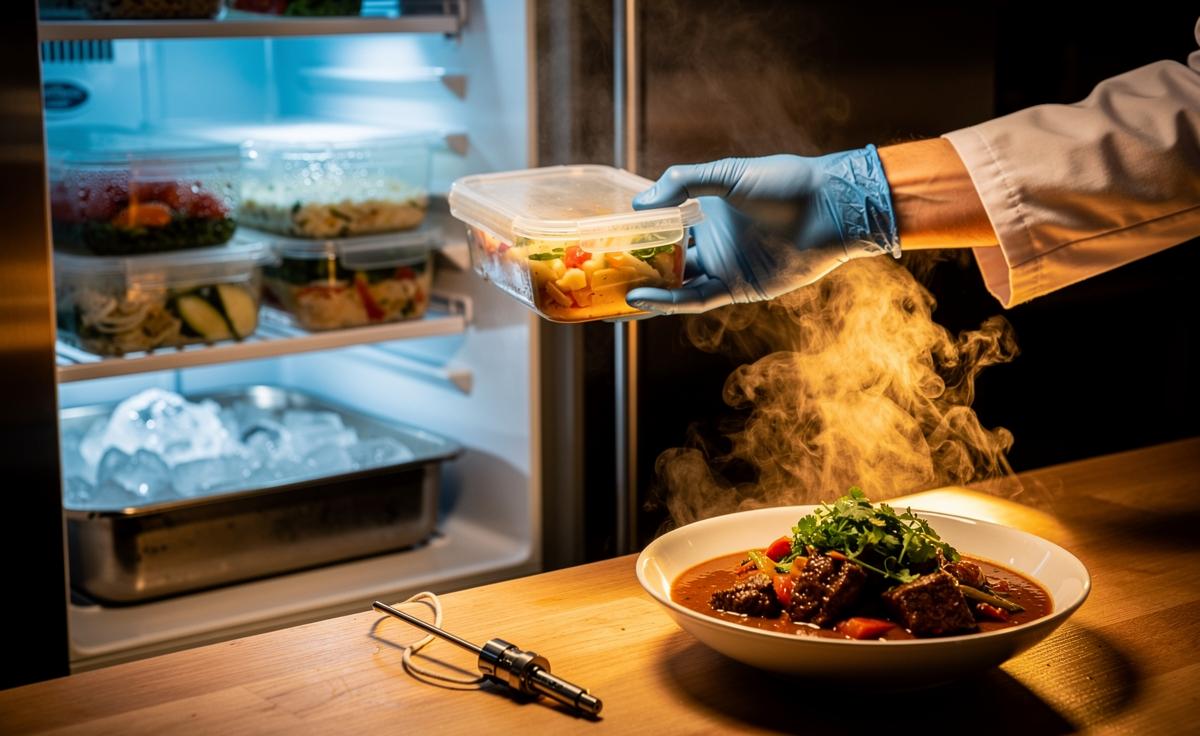
In a nutshell
- 🍛 The 48-hour flavour bloom comes from diffusion, gelatin release, and starch retrogradation; stews, ragù, curries, and lasagne often taste richer after two days.
- 🧪 Respect UK FSA/NHS rules: cool within 1–2 hours, store at ≤5°C, eat within two days, and reheat to ≥70°C to curb risks like Listeria and Bacillus cereus.
- ⚖️ Pros vs. Cons: deeper integration, better mouthfeel, and less waste versus potential texture loss and dulled herbs—use selective patience and refresh with acid, herbs, and crunch.
- 🧊 Engineer safety and quality: use shallow containers (3–5 cm), ice baths for big batches, avoid stacking warm tubs, label dates, and reheat once, piping hot.
- 📊 Choose wisely: beef stew, tomato-based curries, and lasagne show high gains by 48h, while fried foods, fish, and delicate herb sauces rarely improve with time.
Leftovers are the quiet revolutionaries of the British weeknight. We swear that yesterday’s curry is silkier, that stew somehow knits together, and that lasagne graduates from good to glorious after two sleeps in the fridge. Food researchers are now probing why this 48-hour flavour bloom happens, even as safety guidelines urge caution. Chemistry has one story; microbiology has another. The art is discovering how to amplify the taste gains while staying squarely on the right side of food safety. Below, I break down the slow science at play, the risks worth respecting, and the practical steps that let your leftovers sing without ever crossing the line.
The 48-Hour Magic: Chemistry on a Slow Simmer
Flavour deepens in chilled leftovers because time lets ingredients mingle and structures relax. In saucy dishes, diffusion equalises salt, acids, sugars, and aromatic compounds across meat, veg, and starch. As gelatin sets and then re-melts on reheating, it releases a supple mouthfeel that carries umami. Meanwhile, starch retrogradation subtly thickens sauces, concentrating perception of savoury notes. Spices are key: their volatile oils dissolve into fats overnight, softening any harsh top notes and rounding heat. Put simply, the fridge works like a low-energy marinade, harmonising edges while anchoring flavours in the fat phase.
In test kitchens and restaurant prep, this is no secret. A Birmingham curry chef told me his tomato-onion “mother sauce” is deliberately cooked, chilled, and allowed to rest 24–48 hours so allium sweetness emerges and bitterness fades. A home cook might notice the same with beef shin stew: collagen transforms into gelatin, lending body the next day, while browned bits—those Maillard-packed fond—dissolve further into the gravy. Not every dish benefits (more on that later), but stews, braises, ragùs, and spice-led curries often cross a threshold around day two where components stop competing and start singing in chorus.
- Best candidates: Beef or lamb stews, ragù, chilli, tomato-based curries, bean casseroles, braised greens.
- Sometimes better fresh: Fried foods, battered items, fish, crisp salads, delicate herbs-forward sauces.
Safety Clock: Where Palate Meets Public Health
Here’s the tension: the same 48 hours that tames flavours also advances the microbial clock. UK guidance from the FSA/NHS is clear—cool leftovers quickly, refrigerate at ≤5°C, and use within two days. The “danger zone” of 8–63°C is where bacteria multiply fastest, so every minute food spends there matters. While chilling slows growth, some organisms—think Listeria monocytogenes—can still creep along in the cold. Starchy foods, especially rice, carry separate risks from Bacillus cereus spores if cooling is sluggish. Large pots of stew are problematic if they take hours to drop through that warm window.
Safety and flavour are not enemies, but they demand choreography. Portion hot food into shallow containers to speed heat loss; avoid stacking warm tubs in the fridge; and reheat leftovers until piping hot throughout (at least 70°C), stirring to avoid cold spots. Reheat only once—repeated cycles erode both quality and safety margins. The upshot: day-two brilliance is achievable, but only with quick chill, cold storage done right, and a decisive, thorough reheat.
- Cool within 1–2 hours; use ice baths or shallow trays for big batches.
- Fridge at ≤5°C; don’t crowd shelves with warm containers.
- Eat within two days; label with date/time.
- Reheat to ≥70°C (steaming hot), stir, and serve immediately.
| Dish | Flavour Gain by 48h | Key Risk | Best Practice |
|---|---|---|---|
| Beef stew | High | Slow cooling in deep pots | Portion shallow; chill fast; reheat fully |
| Tomato-based curry | High | Allium-heavy sauces lingering warm | Rapid chill; reheat until bubbling |
| Lasagne | Medium–High | Center staying warm too long | Cool in portions; cover loosely, then seal |
| Cooked rice dishes | Medium | B. cereus spores | Cool within 1 hour; eat next day; reheat thoroughly |
| Roast chicken | Medium | Uneven reheat; cross-contamination | Strip meat; store separately; reheat once |
Pros vs. Cons of Waiting 48 Hours
The flavour case is persuasive. Time integrates seasoning, fattens mouthfeel, and melts away bitterness. Economically, day-two meals reduce waste and let households plan—batch-cooked ragù can anchor multiple dinners. Nutritionally, some antioxidants in tomato-based dishes become more bioavailable after cooking and resting. And there’s psychology: the “earned meal” feels richer when the groundwork has already been done. For busy weeks, day-two leftovers can be both a culinary upgrade and a lifestyle relief.
But there are trade-offs. Texture can suffer as starches set too firmly, turning potatoes mealier and pasta softer. Aromatics such as fresh basil, coriander, or dill dull rapidly; fried elements collapse; fish turns flat. Risks also creep up if cooling is sloppy or fridges run warm. And overly long rests can blur distinctions—yesterday’s bright chilli might slide into monotone heat. The answer isn’t blind patience but selective patience: reserve the 48-hour rule for dishes proven to benefit, and refresh others with last-minute herbs, acid, or crunch.
- Pros: Deeper integration; better mouthfeel; lower waste; easier planning.
- Cons: Texture loss; dulled herbs; higher safety diligence required; risk in rice and large-batch cooling.
Why 48 Hours Isn’t Always Better
Not every plate gets better on pause. Delicate proteins—white fish, shellfish—can taste wan or even mealy after chilling and reheating. Crisp coatings, from schnitzel to samosas, surrender their crunch. Even robust dishes can tip from rounded to muddied if herbs oxidise and spices lose their top notes. The same slow chemistry that rounds edges can also sand away contrast—the snap, the lift, the green freshness. Dairy-thickened sauces risk splitting on reheat; garlic-heavy mixes can drift from mellow to dominant if raw alliums were added late.
The fix is engineering, not wishful thinking. Separate components so what should stay crisp (breadcrumbs, herb oil, toasted nuts) meets the dish at the table. Keep pasta and sauce apart; chill rice aggressively and use within a day. Refresh day-two meals with acidity (lemon, vinegar), brightness (fresh herbs), and texture (croutons, pickles). Control variables like container depth and fridge load so cooling is swift and even. Think of the 48-hour window as a tool—not a rule—to be used where chemistry helps and avoided where it harms.
- Portion into 3–5 cm-deep containers; vent until steam stops, then seal.
- Use an ice bath for large pots before refrigeration.
- Add delicate herbs, citrus, and crunchy garnishes at service, not before storage.
- Label date/time; aim to eat within 48 hours; reheat once, thoroughly.
Leftovers do not improve by magic; they improve by chemistry, logistics, and a cook’s judgment. At around 48 hours, stews and curries often hit their stride as flavours integrate and textures settle, yet safety hinges on quick cooling, cold storage, and decisive reheating. The sweet spot is a partnership between patience and protocol: linger long enough for harmony, never so long that risk outruns reward. Which dish in your kitchen has proven to be a bona fide day-two wonder—and how might you tweak your cooling, storage, or reheating routine to make it sing even louder next time?
Did you like it?4.5/5 (26)